

Bird of Prey FAQs & Elaborate Answers - #4
Can owls fly in the rain? and Could that raptor eat my chicken, cat, or small dog?

Can owls fly in the rain?
Well, they certainly don’t look great wet.
I am honestly stumped by how often I’m asked this question. There are many questions I have, things I wonder about, mysteries the universe has yet to reveal, and none of them are what happens when you take an owl and add water. So I apologize if my answer to your personal grand mystery is underwhelming.
Owls are water-resistant. Not waterproof, exactly—their feathers do not form a tight seal with a waxy oil coating on them the way the feathers of a duck or a goose do. Instead, their feathers are periodically coated in an oil when the owl preens its feathers using the secretions from a “preen gland” at the base of the tail. The oil protects the feathers from sun damage and provides a certain degree of hydrophobia to the surface of the feather, causing rain droplets or dew to bead up and roll off.
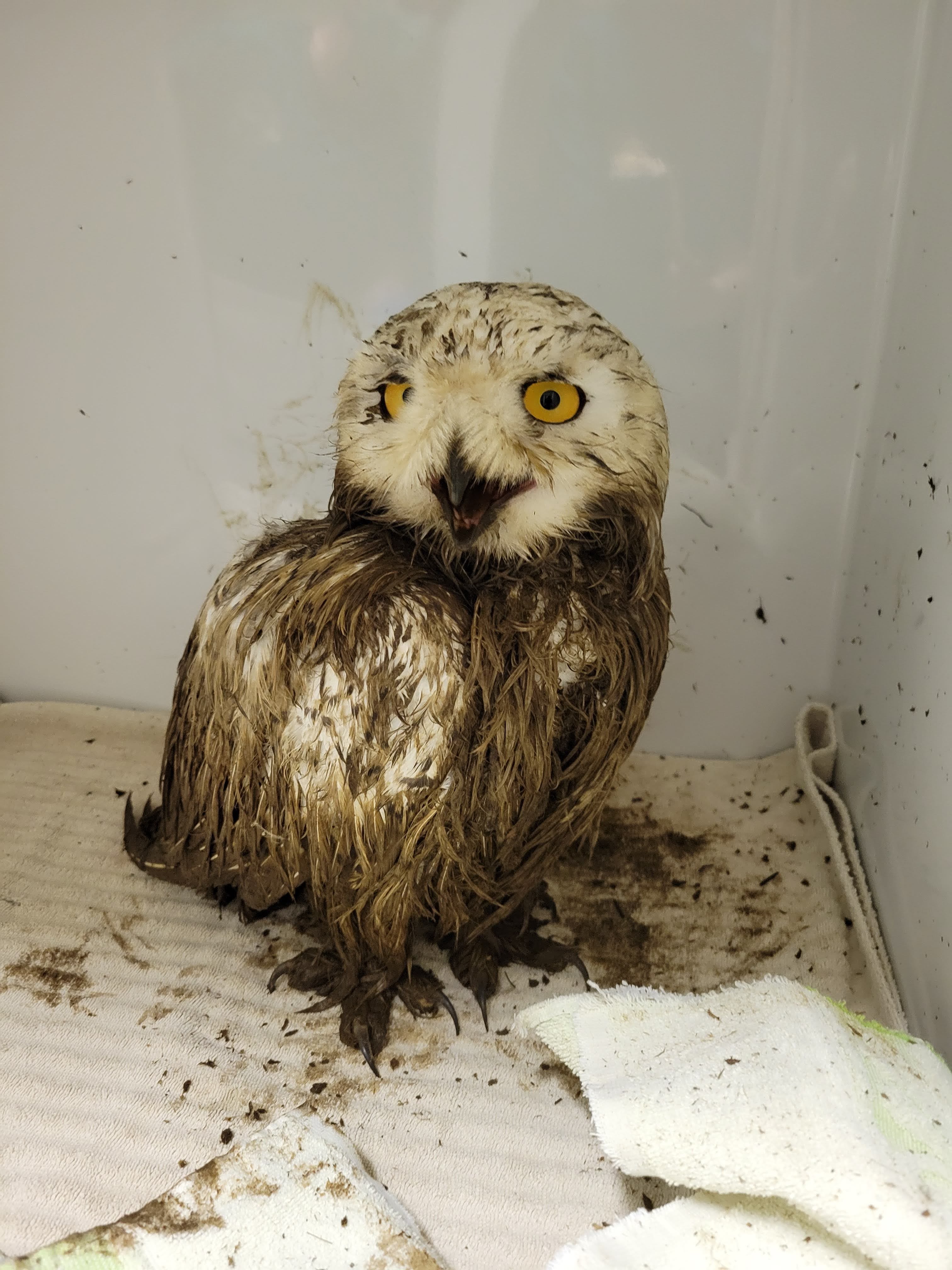
However, this only works for a certain amount of water. If you dumped a bucket of water over an owl’s head, its feathers would very quickly become saturated. Owls are not water-dwelling, diving, or dabbling birds and don’t need true water-proofing, so it is possible for an owl to get soaked through to the skin. This could happen in a torrential rainstorm, for example, if the owl got stuck in a manure puddle.
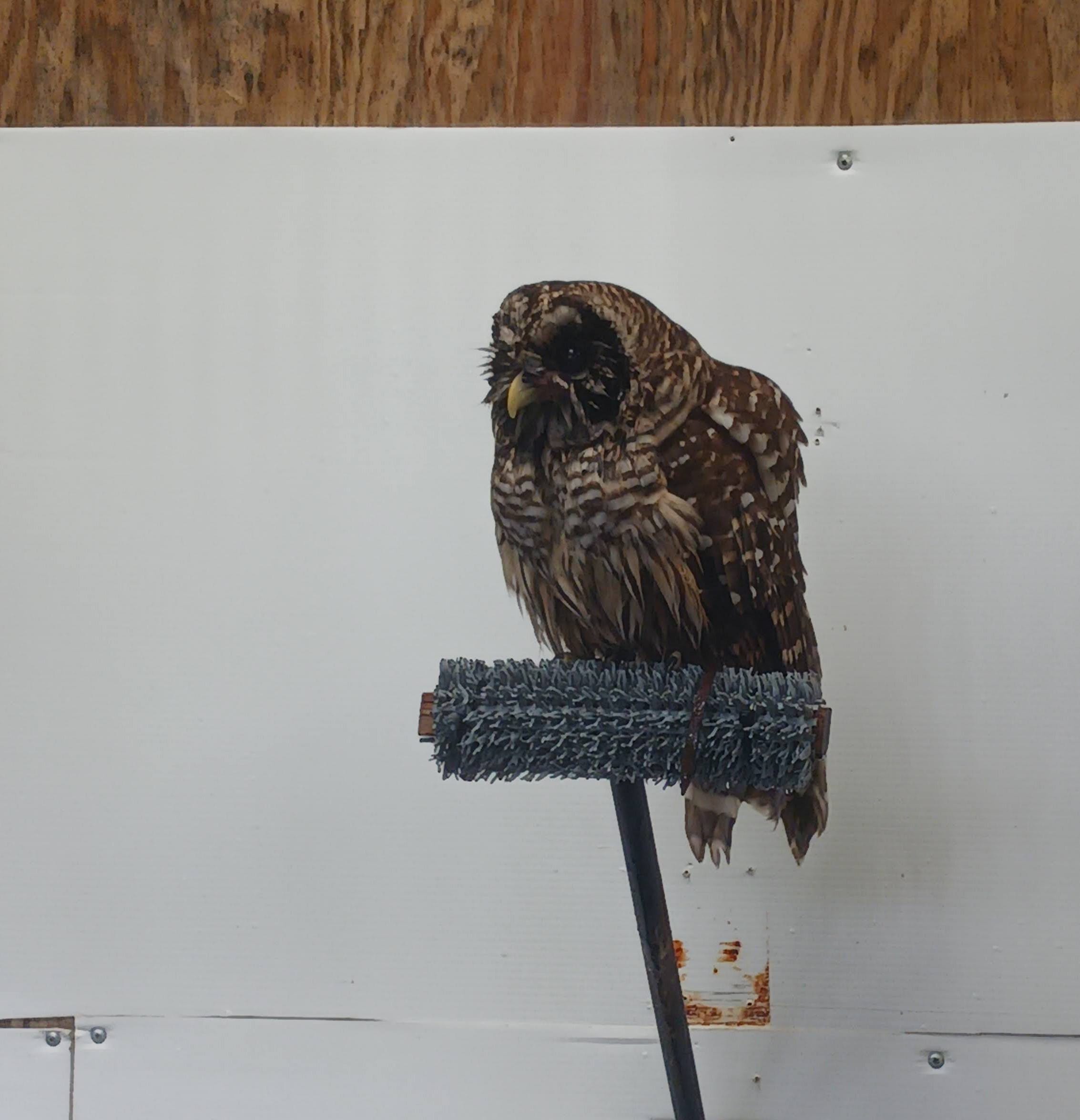
This happens to owls every so often, to a variety of species from Barred Owls to Snowies. One we referred to as “Poo Barred,” who came into the rehab clinic soaked through to the skin with a brown goo that stank like a feedlot. Apparently, this Barred Owl had flown into a puddle in the cow pasture and gotten so mired in muck that all his feathers were absolutely coated in liquid poo, and he couldn’t get off the ground again.
This poor bird, normally plump and round due to the thousands of feathers that an owl sports, was streaked with manure and slicked flat, highlighting the actual shape of his torso, which was something about the size of a large lemon. Poo Barred was given two thorough baths and set up next to a hair dryer for a few hours. The next day he looked like a regular fluffy volleyball again.
Owls in the wild have many ways to prevent themselves from getting that ridiculously soaked, and owls that don’t know how do not survive. A light drizzle, however, is not something they have to worry about. Many of our local owl species are cavity nesters and can hunker down in the hollow of a tree to shelter from the rain. Even the largest owl species that occurs regularly in our area, the Great Horned Owl, is often seen hanging out in evergreen trees, which provide excellent cover from the rain.
In short, owls can’t really fly in the pouring rain, but that doesn’t hinder their daily lives. I mean, you can’t really navigate a forest at night, so don’t feel bad.
Could that raptor eat my chicken, cat, or small dog?
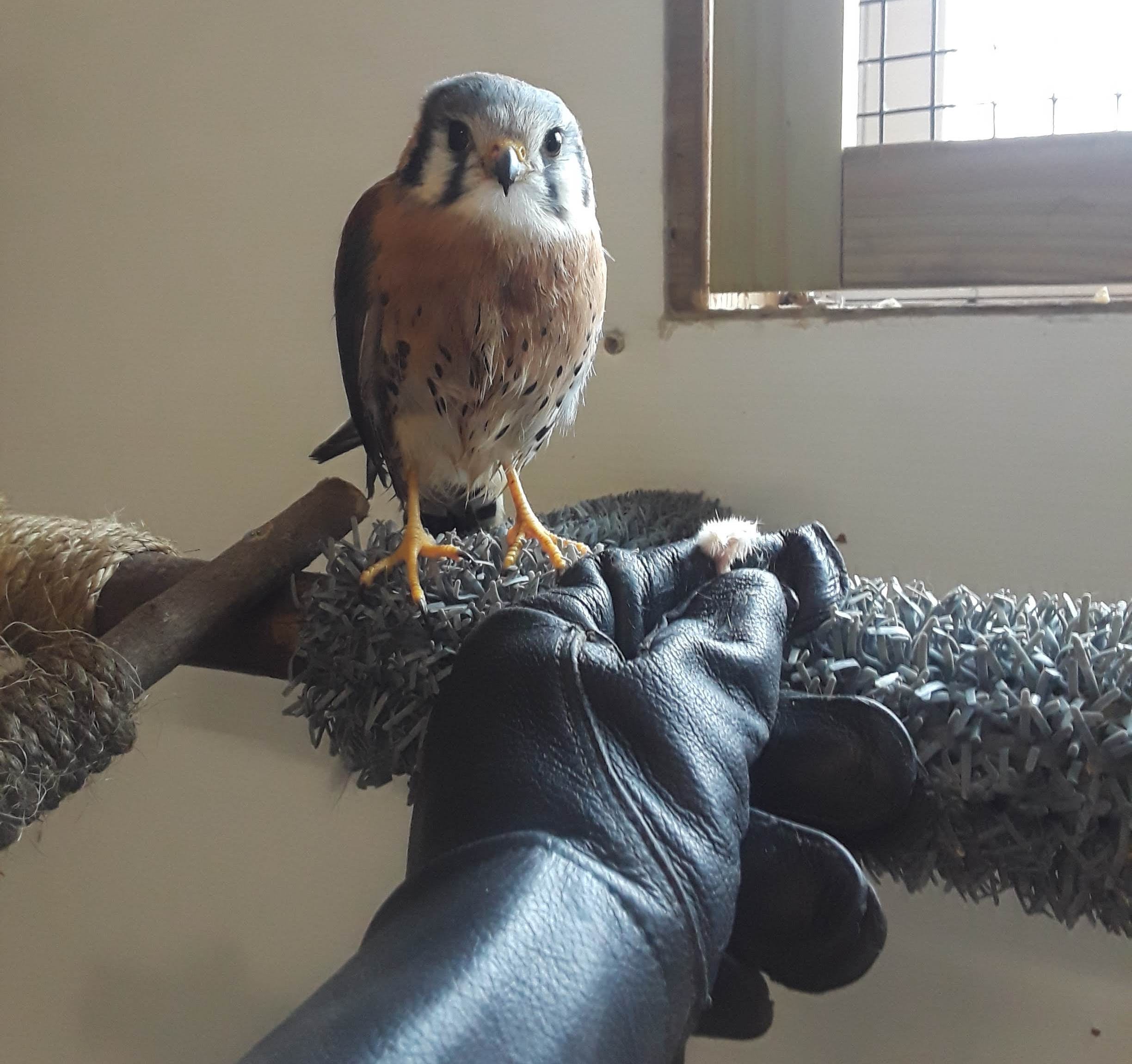
Sir, this is a kestrel. Your chicken could eat him.
I’ll tell you what a raptor could not do, which is carry off your chicken, cat, or small dog. It is generally agreed that most raptors can carry or fly away with about half of their own body weight, and certainly no more than their own weight. This would mean that even the largest of our common, neighborhood Red-tailed Hawks could carry something that weighed at most three pounds. An especially large Great Horned Owl might be able to carry off something that weighed just over four pounds. If you happen to live in a place with abundant, low-flying, cosmopolitan Golden Eagles, the largest eagle in North America, Fido still has to weigh in at under ten pounds to be in any real danger.
But another question should be is a raptor even inclined to see your chicken, cat, or small dog as prey? Unlikely. There are certainly individual birds that discover the private buffet waiting in your chicken coop, but no worldly hawk or owl starts its hunting day thinking, “You know what would be really good right now? A nine-pound animal that hasn’t forgotten it was a dinosaur and could kick me in half.” The exception are younger birds, teenagers essentially, who have not yet learned what does and does not make a respectable meal. I once knew a falconer’s bird, a young male Harris’s Hawk, who was so inexperienced in the ways of the game fowl that he decided to go after one of a troop of wild turkey pullets, each barely the size of a bantam cock. Before the falconer could scream him off of them, the hawk made a grab at a pullet, and was summarily stomped into the dirt by two large feet belonging to Mama Turkey. He escaped, but she had broken his leg.
But let’s not forget—raptors are not the only predators sharing your neighborhood. Feral cats, dogs, and hogs all roam parts of the United States and all pose a significant threat to other animals (mostly the native wildlife). Here in New England, coyotes, foxes, bobcats, black bears, and fishers are also common wild neighbors. It is unsafe to the point of irresponsible to let your domestic animals roam at night. So, you know, supervise your Pomeranian.
If you love what you read, let me know by dropping by my Ko-fi page: